Physarum Controlled Oscillators
3 min read
STATUS: Active
Table of Contents
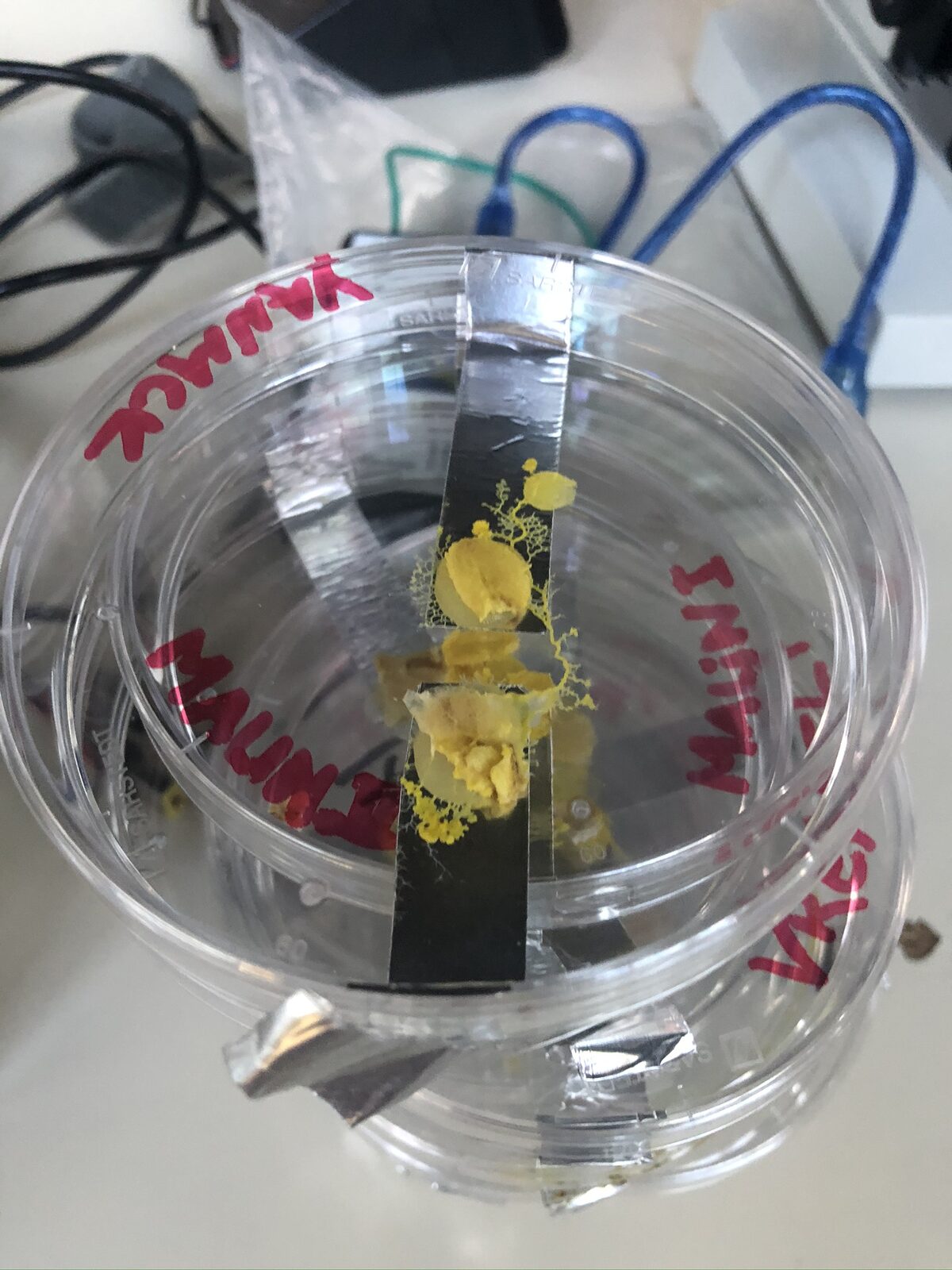
This is an ongoing practice in experimental electronics and signal processing that uses the slime mould Physarum polycephalum as a living analog component in oscillator circuits. It grew out of earlier e-textile work with my sister, Lara Grant, where soft conductive materials were used as circuit components, and extends that lineage to a living substrate: the organism is treated as a true analog signal processor, its shifting electrical properties driving and modulating sound. The work is developed through workshops, lab residencies, and writing, and is the foundation that my current project sLLM builds on.
Selected writing & workshops
- “A Brief Introduction to E-textile Interfaces” — chapter co-authored with Lara Grant on e-textile interfaces to sound circuits, in Nicolas Collins, Handmade Electronic Music: The Art of Hardware Hacking, 3rd edition (Routledge, 2020). Publisher page · read the chapter (PDF)
- “Slime Mold and Network Imaginaries: An Experimental Approach to Communication” — Grant, S. & Savić, S., Leonardo, 55(5), MIT Press, 2022. Read the paper
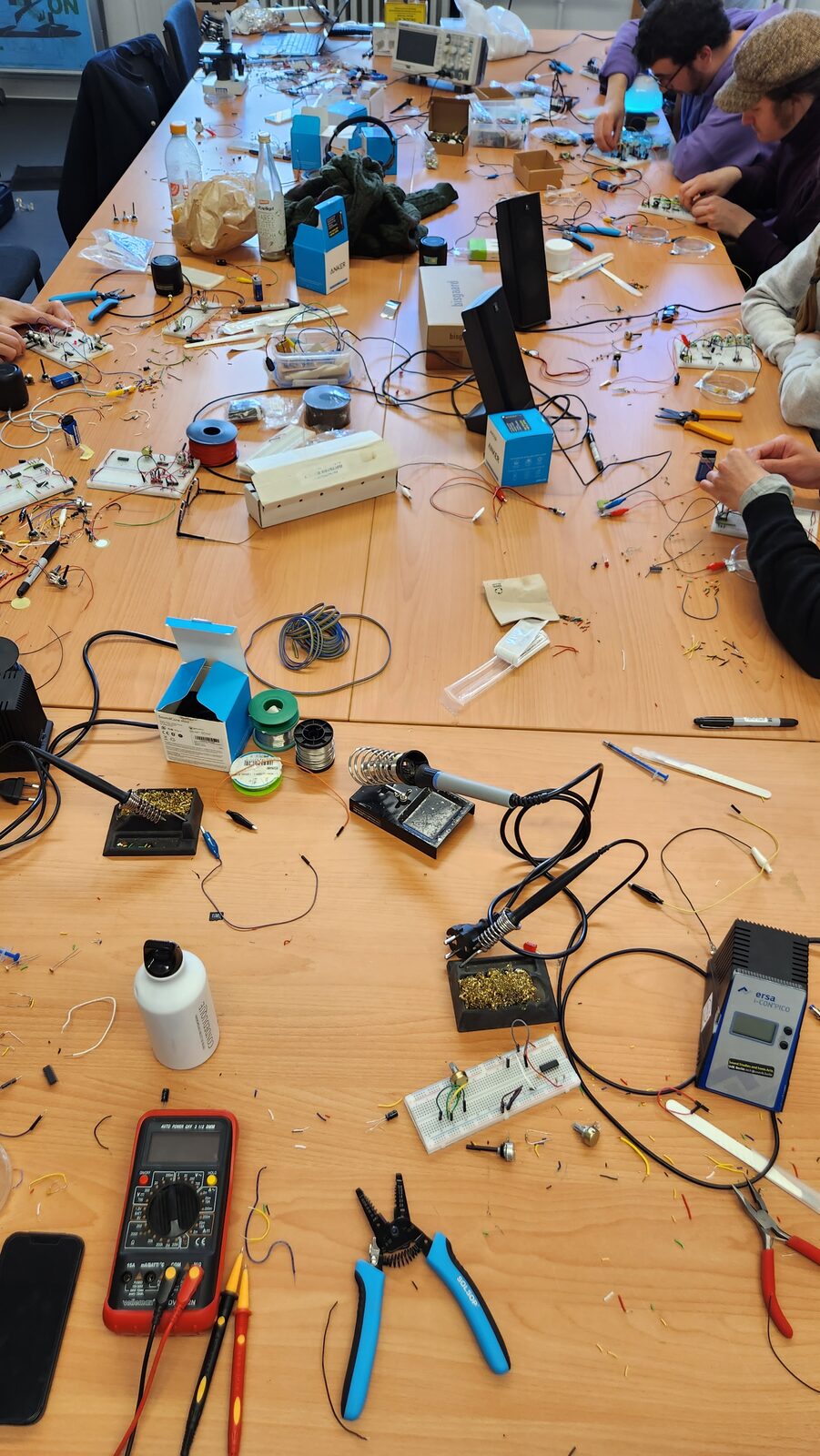
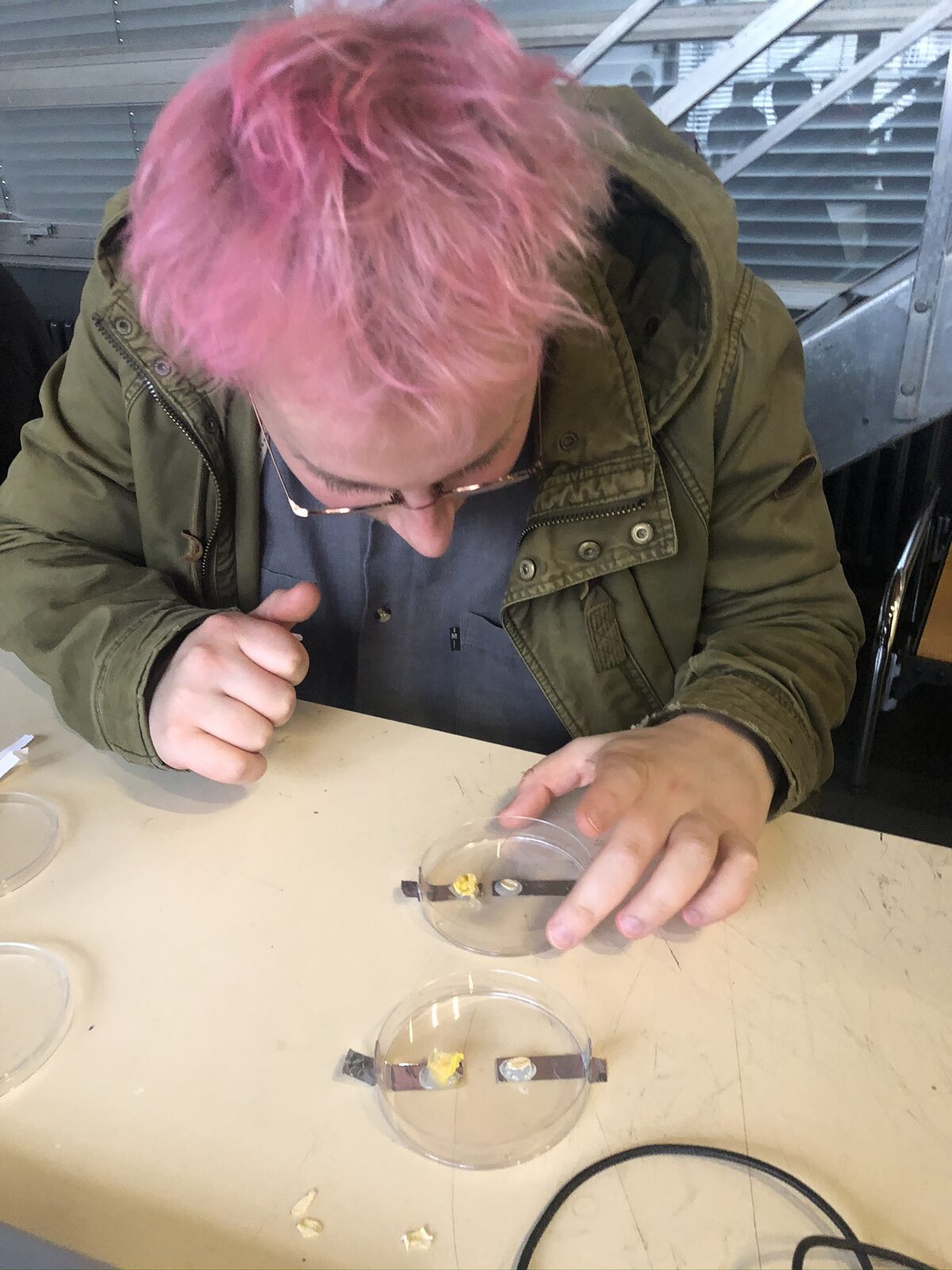
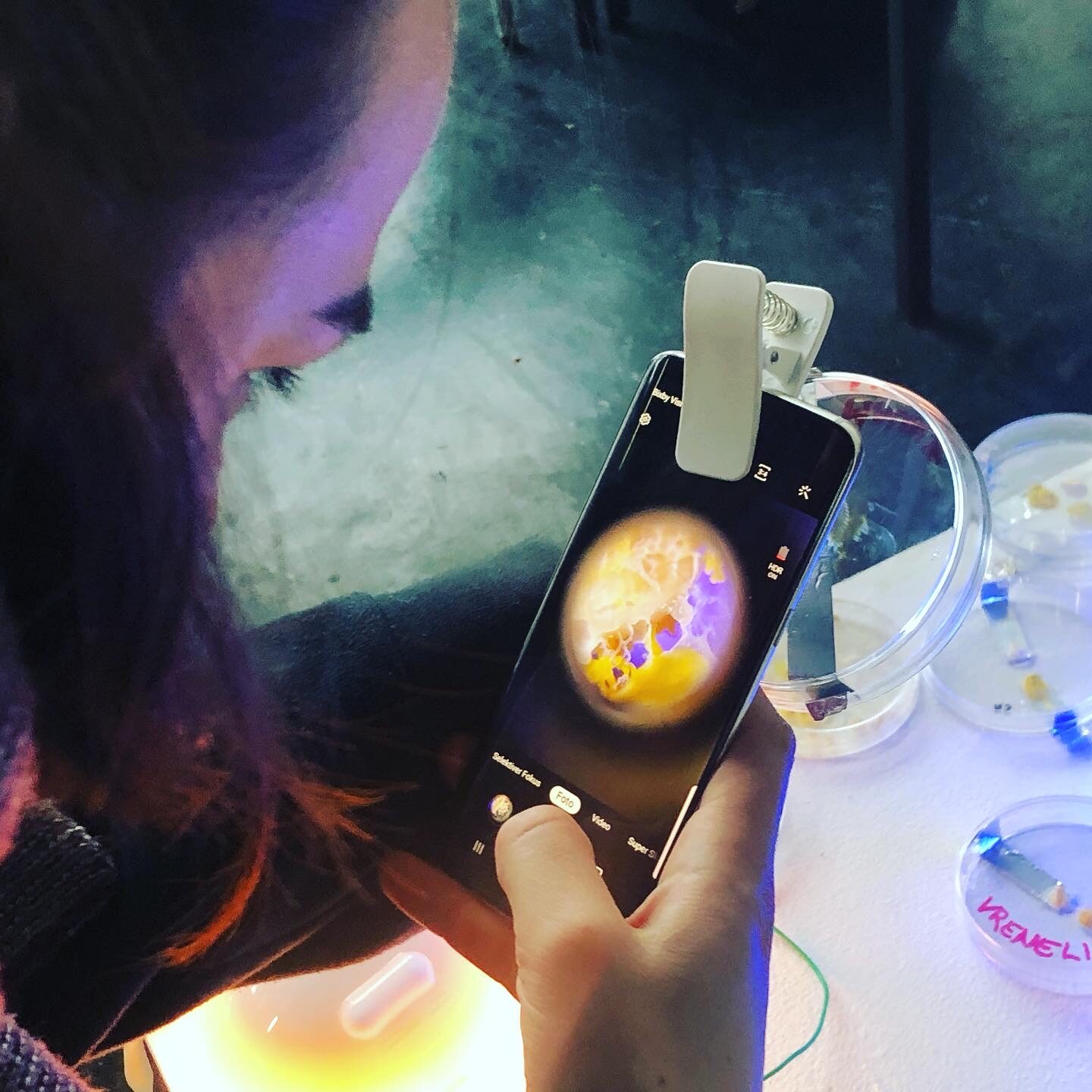
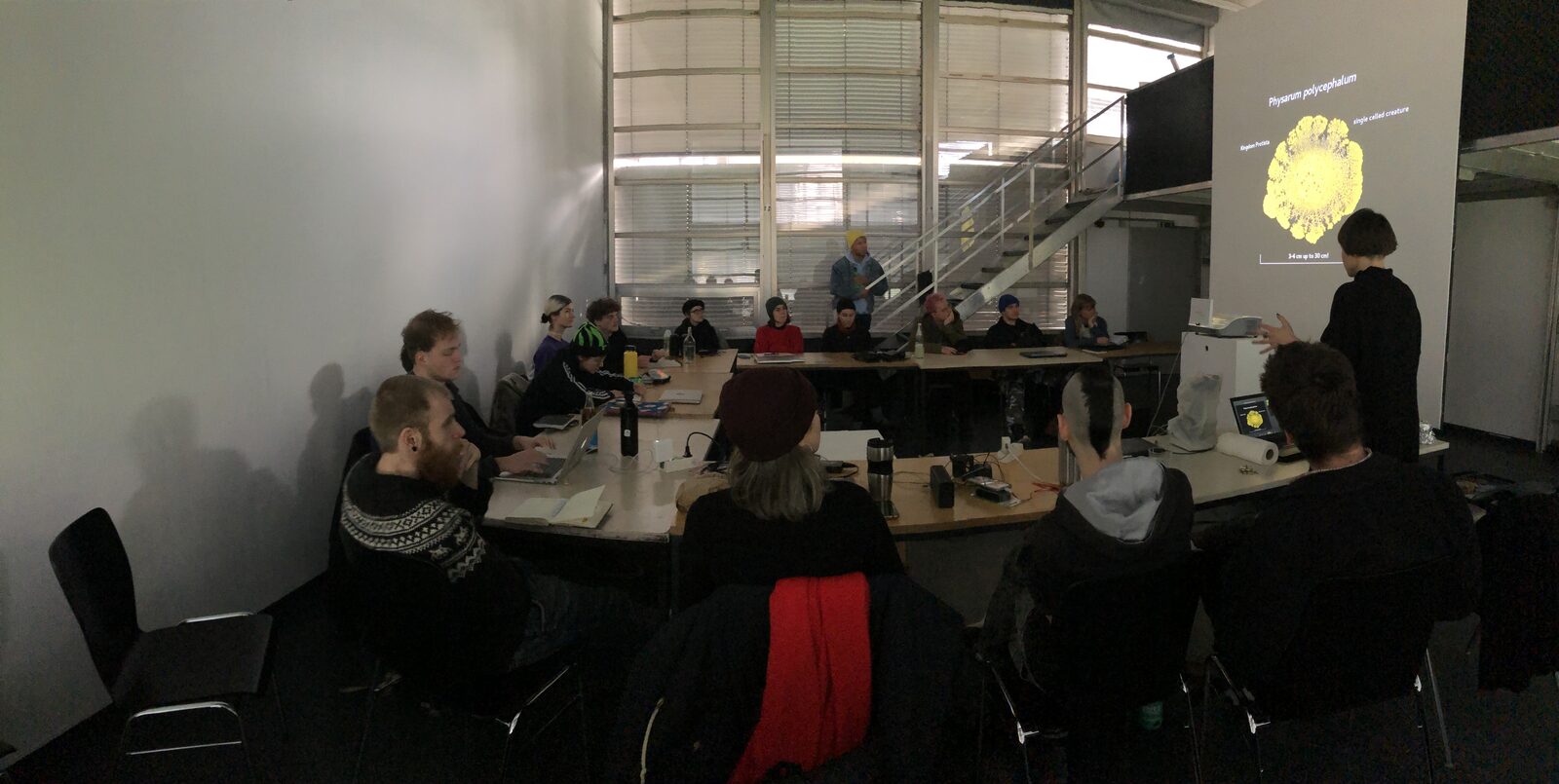
- Experimental Signal Processing with Slime Mould — workshop. weise7.org
- Workshop slide deck (PDF, 30 pp.): Experimental Electronics + Signal Processing with Slime Mould — what Physarum is and why it is interesting as a computational substrate, its sensor behaviours, self-healing wire setups, cultivation, and the synth / oscillator / FM signal-processing connection.
Related projects
Physarum Topologies · Modeling Utopia with Slime Mould · Felted Signal Processing · sLLM